In the early 2026 months, discussions regarding a possible $2,000 federal payment are spreading quickly on social media on forums, online sites, along with video platforms. Recent headlines indicate that deposits could be on the way, and videos on the internet claim you are eligible for automatic payments for thousands of Americans. For families struggling with increasing cost of living, food prices medical expenses, as well as utilities, the notion of a direct federal loan is a natural one.
However, before making adjustments to budgets or preparing financial plans that are based on these claims it’s crucial to separate the factual information from speculation. Federal payments of large scale require formal approval, a structured eligibility guideline, and coordinated distribution by official agencies. In the moment it is more uncertain than the majority of articles on the internet suggest.
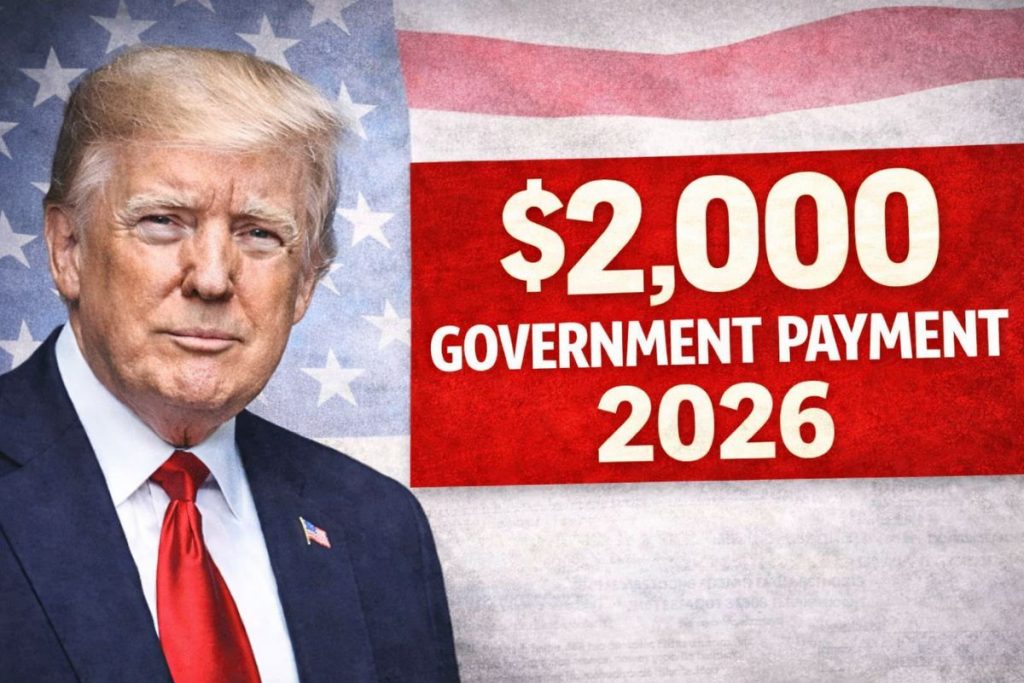
$2,000 Government Payment 2026
The $2,000 figure isn’t something that has been discussed in the federal policy debates. In previous economic relief initiatives, the same amount of payments were considered or discussed. This is why this issue is often brought up when economic pressures are high.
Many factors are fueling an increase in interest to 2026.
- Consistent inflation in the cost of everyday living
- Healthcare and insurance costs are rising.
- Rents and housing costs are increasing.
- Financial strains on households with fixed incomes and retirees
- The social media is gaining attention.
But, public debate doesn’t necessarily mean that the payment was authorized. Federal disbursements are not possible without a law passed by Congress and enacted into law.
Overview of $2,000 Government Payment 2026
| Key Detail | Information |
| Payment Amount | $2,000 (Proposed – Not Confirmed) |
| Official Approval Status | Not yet approved in February 2026. |
| Legislative Requirement | It must be approved by Congress and ratified into law |
| Likely Distributing Agencies | IRS, Social Security Administration, U.S. Treasury |
| Potential Eligibility Factors | Income limits, tax filing status, residency, benefit participation |
| Possible Payment Methods | Direct deposit, paper checks, prepaid debit cards |
| Confirmed Deposit Date | There was no announcement |
| Scam Risk Level | In the rumor period, high |
| Recommended Action | Use official sources for government information only. |
| Preparation Steps | File taxes accurately, update banking info, avoid sharing personal data |
| Official Website | https://www.state.gov/ |
Is the $2,000 Government Payment Officially Approved?
At the time of writing, there was no officially approved national $2,000 government-funded payment program.
A universal federal payment would need:
- A bill that was introduced in Congress
- Approval from both House and Senate
- Signature of President
- The rollout of administrative procedures by government organizations like those of the Internal Revenue Service (IRS) or the Social Security Administration (SSA)
Without these steps federal agencies don’t have the power to make payments.
Beneficiaries should be wary of headlines claiming that the payment has been “already approved” unless confirmed by official channels of the government.
How Federal Payments Normally Work
Knowing how the previous federal relief payment structures were designed will help you understand what would occur if a $2000 payment was accepted.
Agencies Involved
Federal payments of large amounts are usually dispersed via:
- Internal Revenue Service (IRS) – For tax-based payments
- Social Security Administration (SSA) – For certain benefit recipients
- U.S. Treasury Department – For direct processing of disbursements
Required Systems
Before the payment process can begin the agencies must:
- Verify eligibility criteria
- Check the income thresholds
- Double-check tax records
- Verify bank information
- Establish fraud prevention measures
This process takes time, and is not a quick process.
Who Could Potentially Qualify?
If a government loan of $2,000 was approved, the eligibility of the payment will likely be based on a variety of aspects.
1. Income Limits
In the past, most federal payments had income limits based on the Adjusted Gross Income (AGI). Payments are typically are slowed down for households with higher incomes.
2. Tax Filing Status
The eligibility criteria could be based on:
- Single filers
- Married filing jointly
- Head of household
Records of tax filings are often used to determine the eligibility of a person.
3. Residency and Citizenship
The programs typically include:
- U.S. citizenship or legal residency
- Valid Social Security numbers.
4. Participation in Federal Benefit Programs
There are discussions suggesting that retired people, SSI recipients, SSDI beneficiaries, or veterans may be considered in specific plans. But there is no official program is in place.
In the meantime, until legislation is enacted and legislation is passed, these scenarios remain hypothetical.
How Payments Would Likely Be Distributed
If approved the most popular distribution methods consist of:
Direct Deposit
- The most secure and fastest alternative
- Bank accounts are that are already registered with either the IRS or SSA
- Usually, it arrives within a few days after release
Paper Checks
- Mailing to address recorded on record
- Could take a few weeks.
- Sensible to delays in mailing
Prepaid Debit Cards
- In some of the previous federal programs
- Mailing to recipients who are eligible
- Often mistaken for junk mail
Direct deposit typically guarantees the most rapid delivery.
When Could Deposits Arrive?
There is no guarantee for a deposit date until 2026.
If a payment was accepted, the timing would be based on:
- Legislative approval date
- Time for administrative processing
- Verification of eligibility
- Distribution rollout schedule
In previous programs deposit deposits were distributed in waves spread over many weeks.
Any claims of an exact month of deposit, such as March or February must be confirmed directly via official announcements from the government.
Why Scams Increase During Payment Rumors
If large headlines for government payment come out, scam activity is likely to increase.
Common scam techniques are:
- Text messages that claim “Your $2,000 payment is ready”
- Emails requesting bank information in order to transfer funds
- Telephone calls asking Social Security numbers
- Fake websites cloning IRS and SSA portals
Government agencies do not:
- Charge fees for releasing payments
- Request personal information through non-solicited text messages
- You must pay in order to “unlock” benefits
Always confirm information using official websites:
- IRS.gov
- SSA.gov
- Treasury.gov
Could This Be Confused with Other Payments?
Sometimes, payment rumors are triggered by confusion over the routine of deposits.
The figure of $2,000 may represent:
- Tax refunds that are higher than average
- Combined federal benefit deposits
- Assistance programs for the State level
- The retirement benefit is increasing
Tax refunds, like are not uniform and can surpass or even exceed $2,000 based on the amount of income, credits and withholding.
This does not mean that there is a new stimulus program.
How Beneficiaries Should Prepare
Even if no payment has been accepted however, there are steps that individuals are able to take in order to remain ready should a subsequent program be accepted.
File Accurate Tax Returns
Check that your most recent tax return has been completed correctly and in time.
Update Banking Information
Confirm that the details of direct deposit are on file with federal agencies and are up-to-date.
Monitor Official Announcements
Rely solely on:
- Websites of Federal agencies
- Press releases from the official press
- Verified government social media accounts
Avoid Financial Planning Based on Rumors
Don’t make commitments to large costs based on payments that are not confirmed.
Economic Context Behind Payment Discussions
Potential interest payments are linked to the wider economic environment in 2026:
- Inflation that is persistent
- Housing costs for a higher class
- Rising healthcare expenses
- Pressure on the budget for retirees
- A greater dependence on fixed incomes
For those who are struggling to balance their budgets, a one-time payment can provide temporary relief.
However, expectations must be aligned with policy.
How Federal Budget Approval Works
To help you understand the timeline to better understand the timeline, here’s how federal spending authorization usually plays out:
- Proposal was introduced in Congress
- Revisions and review by the committee
- House vote
- Senate vote
- President’s approval
- Agency funding allocation
- Planning for implementation
- Public announcement
This can take weeks or even months.
The concept of a federal payment of $2,000 in 2026 has attracted attention because of economic pressure and the popularity of online discussion. But there is no official authorization been given.
Although financial relief programs are often discussed during difficult economic times but only legislation in writing can establish a real payment.
FAQ’s
1. Is the $2,000 government payment confirmed for 2026?
No. At present there isn’t an officially accepted nationwide $2,000 payment from the government.
2. Who would qualify if it were approved?
The eligibility criteria will likely be based on the income limit as well as tax filing status residence requirements and maybe participation in federal benefits programs.
3. When could payments arrive?
There is no official date for deposit. The timeframe for payment will be contingent on the approval of the legislature and administration rollout.